

The Real Reasons So Many EMT Students Drop Out

Over the last 30 + years, EMT training has become much more difficult to pass. For many, EMT training is one of the most demanding educational programs they have ever experienced. EMT students are expected to quickly master huge amounts of information, from medical terminology and patient assessment techniques to the principles of trauma, treating heart attacks, strokes, drug overdoses and emergency childbirth as well as many other emergency procedures. For most EMT students it’s the first time they’ve ever learned about subjects like human anatomy and physiology in a formal setting. This lack of prior exposure makes every lesson feel like starting from scratch, trying to learn all of the new subjects being covered while still struggling to understand the subjects already covered. This adds extra pressure to keep up with the fast-moving curriculum. Even highly motivated students often feel overwhelmed by the sheer volume of material.
One of the biggest factors driving high attrition rates is the pace. Every day you are learning lots of new information that builds upon what you have already learned. EMT training moves fast because the work itself is high-stakes—emergencies don’t wait for anyone to catch up. Falling even a little bit behind can lead to a domino effect that impacts the rest of the course. Each lesson builds on the last, and if you don’t fully understand core concepts early on, you’ll find yourself struggling more and more as the course continues. This pressure can produce an growing amount of stress that leads to self-doubt, and eventually the decision to drop out or fail out altogether.
These challenges are consistent across the country. Nationwide, approximately 50% of EMT students end up either failing final exams or dropping out of their programs before completion. It’s not because they aren’t committed or capable—it’s because they were never given the opportunity to build a strong foundation before diving into the complicated subjects you have to master in EMT school. When you don’t understand the basics of how the body works or how it is built, every new lesson feels like an uphill battle you’re destined to lose.
The most effective way to avoid these pitfalls is by investing in our EMT Preparation course before your EMT course officially begins. Our EMT Preparation Course equips you with the essential knowledge most students lack when they start. By learning key concepts like anatomy, physiology, and medical terminology ahead of time, and by being introduced to subjects pretty much every EMT student struggles to learn, you will walk into class with the knowledge you need to be confident, participate, and succeed. You won’t have to play catch-up or second-guess yourself when the coursework intensifies. Enroll in our EMT Prep Course today and give yourself every advantage to stay on track, complete your training, and launch your career with pride.
FAQs
How do I prepare for EMT school?
The best way to prepare for EMT school is to get familiar with medical terminology, basic anatomy, and how to study effectively before class starts. Students who spend even a few weeks reviewing these areas ahead of time report feeling less overwhelmed during the first unit, since EMT programs move fast and build on material quickly. A structured pre-course, like our EMT Prep Course, is built specifically to cover this ground before training starts.
What should I study before EMT class starts?
Focus on three areas before your first day: basic anatomy and body systems, common medical terminology, and how to read and interpret vital signs. You don't need to master these topics, just get comfortable enough that they're not brand new when your instructor introduces them. Reviewing a body systems overview and a medical terminology glossary is enough to start.
What is EMT school actually like?
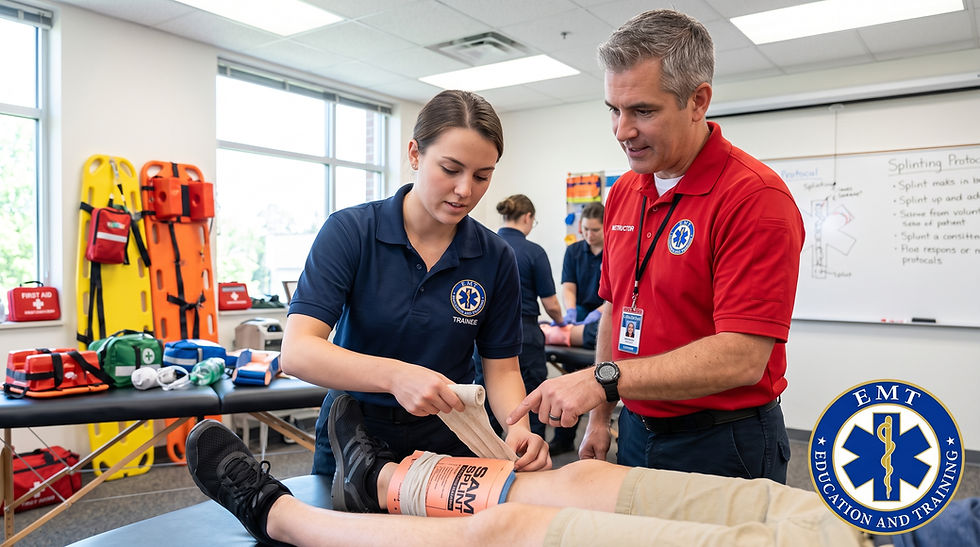
EMT school is fast-paced, hands-on, and heavier on memorization than most students expect. Classes combine lecture time with skills practice, like patient assessment, splinting, and airway management, and most programs test both written knowledge and practical skills before certification. Depending on the course format, you'll spend anywhere from a few weeks to a full semester in class, with regular quizzes along the way.
How long does EMT school take?
EMT school length depends on the course format. An accelerated course can be completed in a matter of weeks with full-day sessions several times a week, while a standard or hybrid course spread across evenings or weekends can take a full semester. Our Accelerated EMT Course runs Monday, Wednesday, and Friday from 8am to 3pm for students who want to finish quickly and get into the field.
Is EMT school hard for beginners with no medical background?
EMT school is manageable for beginners, but it does require consistent study habits since the material moves quickly. Students with no prior medical background succeed regularly, the key is staying ahead of the material rather than trying to catch up after falling behind. Building a study routine before class starts makes a bigger difference than any prior medical knowledge.
What topics are covered in EMT school?
EMT programs generally cover patient assessment, airway management, trauma care, medical emergencies, pharmacology basics, CPR and AED use, splinting and bandaging, and ambulance operations. Most courses also include ride-along or clinical hours to apply these skills in real settings. Our EMT Prep Course breaks down 18 of these subject areas in advance, with a video and downloadable materials for each.
Do I need to study medical terminology before EMT school?
You don't need to be fluent in medical terminology, but a working knowledge of common terms helps you keep pace with lectures instead of spending class time looking words up. Terms related to anatomy, injuries, and vital signs come up constantly from day one.
Is EMT school physically demanding?
Yes, EMT training includes physical skills practice like lifting, carrying, kneeling, and performing CPR, so a reasonable level of physical fitness helps. You don't need to be an athlete, but you should be comfortable with hands-on, physically active learning.
What should I bring on the first day of EMT school?
Most programs expect students to bring a stethoscope, a watch with a second hand, a notebook, and comfortable clothing suited for hands-on skills practice. Your specific program will typically send a supply list before your start date, so confirm with your school directly.
Do I need CPR certification before EMT school?
Some programs require current CPR certification before day one, while others include it as part of the course. Check your specific program's requirements ahead of time so it doesn't hold up your enrollment.
Can I work while attending EMT school?
Many students work while attending EMT school, especially with evening, weekend, or hybrid course formats. Accelerated full-day courses are harder to combine with a regular work schedule, so course format matters if you need to keep working during training.
What tips help students succeed in EMT school?
The students who do best in EMT school study a little every day instead of cramming, practice skills outside of class time, and treat the pre-course material seriously instead of skipping it. Consistency matters more than intensity. Getting comfortable with how you study, not just what you study, makes the biggest difference once the course workload picks up.
What should I expect in my first week of EMT school?
Expect a mix of orientation, foundational lectures, and your first look at hands-on skills like taking vital signs. The first week is usually less intense than the weeks that follow, so it's a good time to lock in a study rhythm before the pace increases.


Comments