

EMT Training Course: How to Pick One That Fits Your Schedule

Choosing an EMT training course is not just about finding a program that covers the right material. It also has to fit into your actual life, whether that means working a full-time job, raising a family, or juggling both while you train for a new career. The good news is that today's EMT courses come in more formats than ever, which means there is likely an option that fits your schedule without forcing you to put your life on hold.
This guide breaks down the main EMT training course formats, how to evaluate the time commitment of each one, and how to choose the option that actually works with your calendar.
What Makes EMT Training Course Scheduling Different From Other Programs?
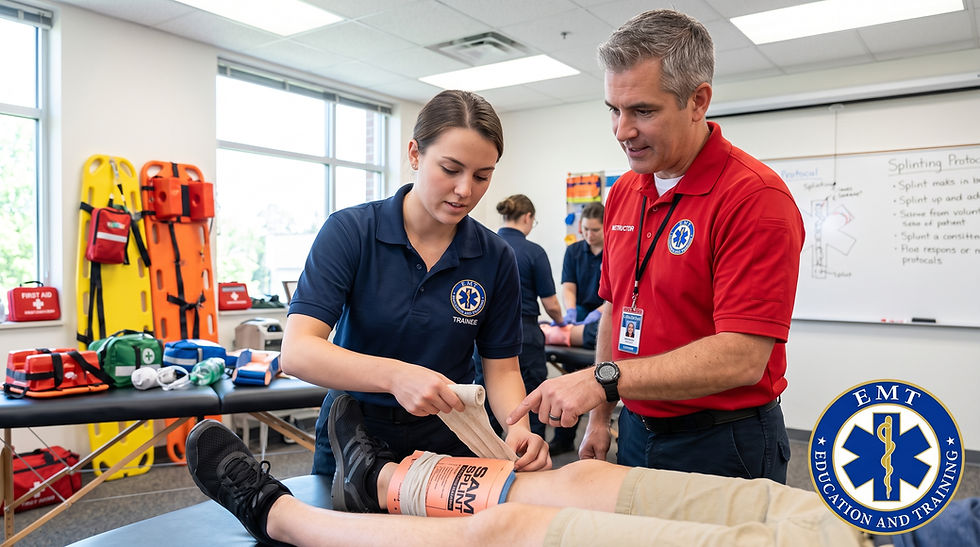
Unlike a typical online certificate program, an EMT training course cannot be entirely self-paced. Because EMTs need to perform physical skills accurately under pressure, every legitimate program includes hands-on skills training and testing that must happen in person, at a scheduled time. The real question when comparing programs is not whether a course requires in-person time, but how much of it, how often, and how flexible the rest of the coursework is around that requirement.
Types of EMT Training Course Formats
Traditional In-Person EMT Course
A traditional emergency medical technician training course meets on a fixed schedule at a community college, fire academy, or dedicated EMT school. Classes typically run several days a week over 10 to 16 weeks, with set start and end times for every session.
This format works well for students who thrive on structure and can commit to the same schedule every week. It tends to be the least flexible option, since missing a session often means falling behind or having to repeat material.
Hybrid EMT Course
A hybrid EMT course splits the workload between self-paced online coursework and in-person skills days. Students typically complete reading, videos, and quizzes independently during the week, join live online sessions for lectures and instructor Q&A, and then attend skills labs and testing on select weekends or evenings.
This format has become one of the most popular emt training course options because it gives working adults room to study late at night or early in the morning, while still requiring only a limited number of in-person days each month.
Accelerated EMT Course
An accelerated EMT course condenses the same required material into a much shorter timeframe, often meeting full days, several days a week, for a few weeks straight. This format is ideal for students who can temporarily clear their schedule and want to get certified as quickly as possible, but it is generally not realistic for anyone working a full-time job during the course.
Self-Paced Online EMT Prep
It is worth noting the difference between a full EMT training course and an EMT prep course. A prep course does not replace your required in-person coursework or hands-on testing, but it lets you review core material entirely on your own time, which makes it a useful tool no matter which training format you eventually choose. You can enroll in the EMT Prep Course here and study whenever your schedule allows.
How to Evaluate an EMT Training Course Schedule Before Enrolling

When comparing emt training classes, ask each program these questions before you commit:
How many hours per week does the online or classroom portion require? Programs vary widely, and some assume significantly more independent study time than others.
How often are in-person skills days scheduled, and on what days of the week? A program that only meets on weekends will fit a working schedule very differently than one that requires weekday afternoons.
Is there a hard deadline to finish, or can you move at your own pace within reason? Some hybrid programs allow students to extend their timeline if life gets in the way, while others have strict cutoffs.
What happens if you miss a scheduled skills day? Understanding the make-up policy in advance can save you from a scheduling conflict turning into a lost tuition payment.
For a broader look at what the coursework itself involves once you enroll, this guide on what to expect during your EMT training course walks through the beginner experience in more detail.
Matching a Course Format to Your Life
If You Work Full-Time
A hybrid emt training program is typically the best fit, since the bulk of the coursework happens on your own schedule and in-person requirements are limited to specific days. Look for programs that offer evening or weekend skills days specifically, rather than assuming every hybrid course automatically accommodates a 9-to-5 schedule.
If You Are a Student or Between Jobs
An accelerated emt course can be a smart choice if you have the flexibility to dedicate several weeks to full-time training. Since these programs move quickly, they are best suited for students who are not also trying to hold down a job during the course.
If You Have Caregiving Responsibilities
Look closely at how in-person sessions are scheduled. Programs with predictable, limited skills days, rather than frequent classroom meetings, tend to be easier to plan around family responsibilities. It also helps to confirm whether skills days are scheduled well in advance, since last-minute scheduling can be difficult to work around.
Ready to Get Started on Your Own Schedule?
If flexibility is your top priority, the smartest first step is preparing on your own time before your in-person requirements even begin. You can enroll in the EMT Prep Course here and start working through lessons whenever it fits into your week, so you walk into your training course with a head start.
Preparing Physically Before You Enroll
Whichever format you choose, EMT training includes physical skills practice, from lifting and moving patients to kneeling during patient assessments. Building basic physical readiness before your course starts can make skills days feel far less overwhelming once your schedule gets busy. This guide on physical fitness tips to prepare for EMT training covers simple ways to get ready before day one.
Common Scheduling Mistakes to Avoid
Underestimating weekly study time. Even self-paced coursework requires consistent hours each week, and falling behind early often snowballs.
Not confirming skills day dates before enrolling. Ask for the full skills day calendar upfront rather than assuming it will work around your schedule later.
Choosing the fastest option without considering your job. An accelerated emt course looks appealing, but only works if you can realistically clear your calendar for it.
Ignoring the exam prep timeline. Finishing your coursework is not the finish line. Build in time afterward to review before sitting for the NREMT exam.
If you want a complete overview of how different EMT programs compare before you commit to one, this resource on the complete beginner's guide to EMT training programs is a helpful starting point for comparing your options side by side.
What a Typical Week Looks Like in a Hybrid EMT Course
To make this more concrete, here is a simplified example of what a week might look like in a hybrid emt training course:
Monday through Thursday: Online reading, video lessons, and practice quizzes completed independently, usually a few hours total
One evening per week: Live virtual class session with an instructor for lecture and Q&A
One weekend day per month: In-person skills lab or testing day, scheduled several weeks in advance
This structure allows most of the workload to happen around a full-time job, with only occasional in-person commitments.
Not Sure Which Format Is Right for You?

If you are still weighing your options, it can help to gauge your current knowledge level before deciding how much structure you need. You can take a free assessment test here to see where you stand, which can make it easier to judge whether a faster accelerated format or a more paced hybrid schedule is the better fit for you.
Why Program Length Still Matters, Even With a Flexible Schedule
According to the U.S. Bureau of Labor Statistics, demand for EMTs and paramedics is projected to keep growing, which means the sooner you finish your training and pass the National Registry of Emergency Medical Technicians (NREMT) exam, the sooner you can start applying for jobs. Choosing a flexible format should not come at the cost of finishing in a reasonable timeframe, so weigh both flexibility and total program length when comparing your options.
Frequently Asked Questions
1. What is the most flexible EMT training course format for working adults?
A hybrid EMT course is typically the most flexible option, since it combines self-paced online coursework with a limited number of scheduled in-person skills days.
2. How many hours per week does an EMT training course require?
This varies by program, but most students should expect to dedicate several hours per week to coursework, plus additional in-person time for skills labs and testing days.
3. Can I complete an EMT training course entirely online?
No. While much of the coursework can be completed online, hands-on skills training and testing must happen in person, since these skills need to be demonstrated and evaluated directly.
4. What is the difference between an accelerated and a hybrid EMT course?
An accelerated EMT course condenses training into a short, intensive schedule with frequent full-day sessions, while a hybrid course spreads coursework out with limited in-person requirements, making it easier to balance with a job.
5. What happens if I miss a scheduled skills day?
Policies vary by school, so it is important to ask about make-up options before enrolling. Some programs offer rescheduling, while others may require you to wait for the next available session.
6. How can I prepare before my EMT training course schedule gets busy?
Reviewing key subjects ahead of time through a self-paced prep course can help you build a foundation before your official coursework begins, making it easier to keep up once your schedule fills up.
7. Does a flexible EMT training course take longer to complete than a traditional one?
Not necessarily. Many hybrid programs are designed to be completed in a similar timeframe to traditional courses, just with a different balance between online and in-person time.
Want to prepare on your own schedule before training begins? Enroll in the EMT Prep Course today and start reviewing whenever it works for you.


Comments