

Emergency Medical Technician Training Course: What's Included
If you are researching an emergency medical technician training course for the first time, it helps to know exactly what you are paying for before you enroll. Course names and marketing pages can make every program sound similar, but the actual components, from classroom instruction to hands-on skills days, can vary quite a bit depending on the school and format you choose.
This guide breaks down every major piece of a typical emergency medical technician training course, so you know what to expect before your first day of class.
What Is an Emergency Medical Technician Training Course?
An emergency medical technician training course is a state-approved program that teaches the knowledge and hands-on skills needed to work as an EMT. It prepares students for the National Registry Emergency Medical Technician (NREMT) exam, which is required for certification in nearly every state.
Most courses combine several core components: classroom or online instruction, hands-on skills practice, testing, and often real-world field experience. Understanding how these pieces fit together makes it much easier to choose the right program and know what to expect once you start.
Core Components of an EMT Training Course
While every school structures its program a little differently, most emergency medical technician training courses include the following core elements.
1. Classroom or Online Didactic Instruction
This is the academic backbone of the course, covering topics such as anatomy basics, patient assessment, airway management, cardiac emergencies, trauma response, and legal responsibilities. Many programs now deliver this portion through an e-book or online learning platform, paired with weekly live sessions where instructors cover key subjects and answer student questions in real time.
2. Hands-On Skills Training
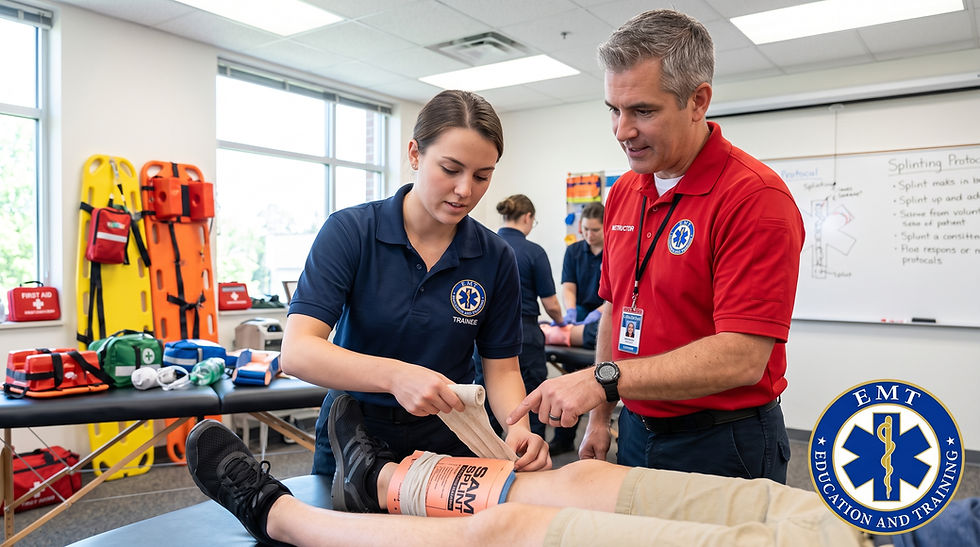
Alongside the academic material, students practice physical skills like CPR, splinting, spinal immobilization, and bleeding control. This usually happens during dedicated in-person skills days, where students work in small groups using equipment such as stethoscopes, blood pressure cuffs, and spinal boards, often provided by the school at no extra cost.
Skills days are typically mandatory, since this hands-on repetition is what builds the muscle memory needed to perform these tasks confidently in real emergencies.
3. Practical and Written Testing
Throughout the course, students are tested on both their practical skills and their written knowledge. Practical testing evaluates whether a student can correctly perform required skills under realistic conditions, while written testing checks comprehension of the academic material. Passing both is typically required before a student can move on to the National Registry exam.
4. Ride-Alongs and Field Experience
Many emergency medical technician training courses include ride-alongs, where students accompany a local ambulance crew on real calls. This gives students exposure to actual patient care before they are working independently, and it is often one of the most valuable parts of the entire course for building real-world confidence.
5. NREMT Exam Preparation
A well-structured course weaves exam preparation throughout the curriculum rather than saving it for the final week. This includes practice questions modeled after the real exam format, along with review sessions that reinforce the material most commonly tested on the National Registry Emergency Medical Technician exam.
If you want a broader look at how these pieces come together from a student's perspective, this guide on what to expect during your EMT training course walks through the beginner experience in more detail.
Common EMT Training Course Formats
Not every emergency medical technician training course follows the same schedule. Understanding the differences can help you choose the format that fits your life.

Accelerated EMT Courses
Accelerated programs condense the same required material into a shorter, more intensive schedule, often meeting several days a week for full days. These are a good fit for students who want to get into the field quickly and can dedicate significant time to coursework in a short window.
Hybrid EMT Courses
Hybrid programs combine online didactic coursework with in-person skills training and testing. Students typically complete weekly reading and homework independently, then join live online sessions for lectures and Q&A, with skills days scheduled on select weekends. This format is popular with working adults who need flexibility without sacrificing hands-on training.
EMT Prep Courses
An EMT prep course is different from a full EMT training course. Rather than replacing your required coursework, a prep course is designed to get you ready before you start, or help you review before your exam. These self-paced programs typically include presentation videos, quizzes, and downloadable study materials covering each subject area.
How Long Does an Emergency Medical Technician Training Course Take?
Program length depends heavily on format. Accelerated courses can be completed in as little as a few weeks of intensive, full-day sessions, while hybrid and traditional programs often run for two to three months. Most students finish their entire emergency medical technician training course and sit for the NREMT exam within two to four months of starting.
Preparing Before You Enroll
Starting your course with a strong foundation makes the entire experience less stressful. Two things make the biggest difference:
Academic preparation. Reviewing key subjects before your first class helps you keep up with the pace once training begins, rather than learning everything for the first time under pressure.
Physical preparation. Since EMT work involves lifting, kneeling, and moving patients, building baseline physical readiness before training starts can make skills days feel far more manageable. This guide on physical fitness tips to prepare for EMT training covers simple ways to get ready before day one.
Ready to Prepare Before You Enroll?
If you want to walk into your emergency medical technician training course with a head start, the most effective way to prepare is with a self-paced review built specifically for incoming EMT students. You can enroll in the EMT Prep Course here and start reviewing key subjects on your own schedule before class begins.
What Does an Emergency Medical Technician Training Course Typically Cost?
Pricing varies by school, format, and location, but most programs bundle a few common cost categories: a base course fee, a registration or enrollment fee, and the cost of required textbooks or e-books. Programs that provide practical equipment, such as stethoscopes and blood pressure cuffs, may build that cost into tuition rather than charging separately. When comparing programs, ask for a full breakdown of fees upfront so you are not caught off guard by add-on costs partway through the course.
What to Look for in a Quality EMT Training Course
When comparing programs, a few factors matter more than others:
State approval and accreditation, since only approved programs qualify graduates for NREMT testing
A clear breakdown of classroom, skills, and testing requirements, so you know exactly what is expected
Included equipment, so you are not paying extra for stethoscopes, blood pressure cuffs, or other required gear
Ride-along or field experience opportunities, which add real-world value beyond the classroom
Strong first-time NREMT pass rates, which reflect how well the program actually prepares students for the exam
For a broader overview of how to evaluate programs side by side, this resource on the complete beginner's guide to EMT training programs is a helpful starting point if you are still comparing your options.
Not Sure Where You Stand? Take a Free Assessment

If you are unsure whether you are ready to jump into a full emergency medical technician training course, it can help to test your baseline knowledge first. You can take a free assessment test here to see where you currently stand and identify any subjects worth reviewing before you commit to a full program.
After Your Course: The NREMT Exam
Completing your emergency medical technician training course is a major milestone, but most students still need focused review before sitting for the National Registry of Emergency Medical Technicians (NREMT) exam. According to the U.S. Bureau of Labor Statistics, demand for EMTs and paramedics is expected to keep growing nationwide, which makes finishing strong and passing on your first attempt well worth the extra preparation.
Frequently Asked Questions
1. What is included in a typical emergency medical technician training course?
Most courses include classroom or online instruction, hands-on skills training, practical and written testing, and often ride-alongs with a local ambulance crew, all designed to prepare students for the NREMT exam.
2. How long does an EMT training course take to complete?
Program length varies by format. Accelerated courses can be completed in a few weeks of full-day sessions, while hybrid or traditional programs typically run two to three months.
3. Is equipment provided during EMT training, or do I need to buy my own?
Many programs provide required equipment such as stethoscopes, blood pressure cuffs, splinting devices, and spinal boards at no additional cost to the student, though this varies by school.
4. What is the difference between an EMT training course and an EMT prep course?
An EMT training course is the full state-approved program required for certification, while an EMT prep course is a supplemental review designed to help students prepare before starting training or before sitting for the NREMT exam.
5. Do EMT training courses include hands-on field experience?
Many programs include ride-alongs, where students accompany an ambulance crew on real calls to gain practical, real-world experience before working independently.
6. How physically demanding is EMT training?
EMT training involves lifting, kneeling, and moving patients during skills practice, so building basic physical readiness beforehand can make the hands-on portions of the course easier to manage.
7. What happens after I complete my EMT training course?
After finishing your coursework, you will need to pass the National Registry Emergency Medical Technician exam and apply for state certification before you can begin working as a certified EMT.


Comments