

Emergency Medical Technician Training: A Complete Beginner's Guide

If you are exploring emergency medical technician training for the first time, it is normal to have a lot of questions. What does the coursework actually involve? How long does it take? Do you need any experience beforehand? This guide walks you through everything a beginner needs to know, from the basics of what EMT training covers to how to prepare before your first day of class.
Whether you are considering this as your first career, a career change, or a stepping stone toward paramedic or nursing school, understanding the full picture upfront will make the entire process far less intimidating.
What Is Emergency Medical Technician Training?
Emergency medical technician training is a state-approved course that teaches the knowledge and hands-on skills required to work as an EMT. It prepares students to sit for the National Registry Emergency Medical Technician (NREMT) exam, which is required for certification in nearly every state.
Unlike a traditional college degree, Emergency Medical Technician training is designed to get students job-ready in a matter of weeks or months rather than years. This is one of the biggest reasons it has become such a popular entry point into healthcare for people who want hands-on, meaningful work without committing to a long academic program.
Who Takes EMT Training?
EMT programs attract a wide range of students, including:
People wanting to begin a career in healthcare
Career changers looking for a faster path into an exciting, in-demand field
College students exploring emergency medicine before committing to nursing or medical school
Firefighters and public safety candidates who need EMT certification as a job requirement
Anyone interested in becoming an EMT as a stepping stone toward paramedic training
No matter which category you fall into, the foundational coursework is largely the same, which is what makes this guide useful no matter your end goal.
Do You Need Any Experience to Start EMT Training?
No prior medical experience is required. Emergency medical technician training is built for beginners and teaches every important skill from the ground up. It all begins with developing a foundation of knowledge in basic concepts like anatomy and patient assessment before progressing to more advanced emergency response skills.
Basic Requirements Before You Enroll
Most programs require students to meet a few baseline qualifications:
Be at least 18 years old (some programs accept 16 or 17 year olds with parental consent)
Hold a high school diploma or GED
Pass a background check
Meet basic physical readiness standards, since the role involves lifting and moving patients
Hold a current BLS CPR certification, or complete one as part of the course
What Does EMT Training Actually Cover?
This is usually the biggest question for beginners, so let's break it down into its core components.

Classroom or Online Coursework
The academic portion of EMT training covers topics such as human anatomy basics, patient assessment, airway management, cardiac emergencies, trauma response, and legal and ethical responsibilities. Many programs now offer this portion online or in a hybrid format, which allows students to learn at a pace that fits around work or family obligations.
Hands-On Skills Training
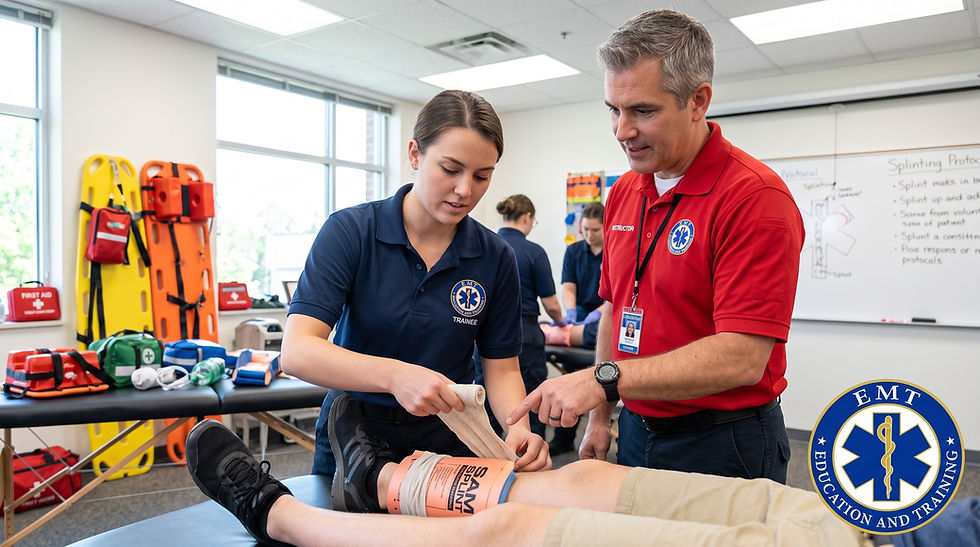
Alongside the academic material, students practice physical skills like CPR, splinting, spinal motion restriction, airway management, and bleeding control. This typically happens during dedicated in-person skills days, where small groups of students work with instructors using real equipment such as stethoscopes, blood pressure cuffs, and spinal boards.
Clinical or Ride-Along Hours
Many emergency medical technician training programs also include a set number of clinical or ride-along hours, giving students exposure to real patient care, either inside a hospital emergency department or alongside an ambulance crew, before they are expected to work independently.
NREMT Exam Preparation
A well-structured EMT training course weaves exam preparation throughout the curriculum instead of saving it for the final week. This typically includes practice questions modeled after the real exam and review sessions covering the material most commonly tested on the National Registry exam.
How Long Does EMT Training Take?
Program length depends heavily on the format you choose. A traditional in-person program typically runs 10 to 16 weeks on a fixed schedule, while hybrid and self-paced formats can move faster or slower depending on how much time a student dedicates each week. Most students complete their full emergency medical technician training and sit for the NREMT exam within two to four months of starting.
If scheduling flexibility is a priority for you, this guide on how to pick an EMT training course that fits your schedule breaks down the differences between traditional, hybrid, and accelerated formats in more detail.
Types of EMT Training Formats
Traditional In-Person Training
These programs follow a set classroom schedule at a community college, fire academy, or dedicated EMT school. They offer direct instructor access but require attendance at fixed times, which can be difficult for working adults to manage.
Hybrid Training
Hybrid programs combine self-paced online coursework with in-person skills labs and clinical hours. This format has grown in popularity because it gives students flexibility for the academic portion while still providing the hands-on practice that cannot be replicated online.
Accelerated Training
For students who want to move quickly, accelerated programs condense the same required material into a shorter, more intensive schedule, often meeting several full days a week. These work well for students who can temporarily clear their calendar but are generally not realistic for anyone working full-time during the course.
What's Included in a Quality EMT Training Course
Not every program looks the same, so it helps to know what to look for before enrolling. A strong emt training course should include:
State approval and accreditation, since only approved programs qualify graduates for NREMT testing
A clear breakdown of classroom, skills, and clinical hour requirements
Equipment provided at no extra cost, so you are not paying separately for stethoscopes or blood pressure cuffs
Ride-along or field experience opportunities
Strong first-time NREMT pass rates
For a full breakdown of exactly what should be included in a program before you commit, this guide on what's included in an emergency medical technician training course covers every component in detail.
How to Prepare Before Your First Day of Class
Starting your EMT training with a strong foundation makes the entire experience less stressful. Two things make the biggest difference.
Academic preparation. Reviewing key subjects before your first class helps you keep pace once training begins, rather than encountering everything for the first time under pressure. You can enroll in the EMT Prep Course here and start reviewing core concepts on your own schedule before class starts.
Knowing where you stand. If you are unsure how ready you are, it helps to test your baseline knowledge first. You can take a free assessment test here to identify any subjects worth reviewing before you commit to a full program.
Ready to Begin Your EMT Training Journey?
If you are ready to take the next step, the most effective way to prepare is with a structured, self-paced program built around the real exam format. You can enroll in the EMT Prep Course here and begin working through lessons on your own schedule, wherever you are starting from.
What Happens After EMT Training?
Completing your coursework is a major milestone, but most students still need focused review before sitting for the National Registry of Emergency Medical Technicians (NREMT) exam. After passing the NREMT exam, you can apply for state certification and begin applying for EMT positions.
According to the U.S. Bureau of Labor Statistics, demand for EMTs and paramedics is projected to keep growing nationwide, which makes finishing your training and certification well worth the investment of time.
If you want a closer look at what to expect once you actually enroll in a program, this guide on what to expect before you enroll in an EMT training program walks through the process step by step.
Common Questions Beginners Have About EMT Training
How Physically Demanding Is EMT Training?
EMT training involves lifting, kneeling, and moving patients during skills practice, so building basic physical readiness beforehand can make the hands-on portions of the course easier to manage. Many students find that a bit of preparation ahead of time makes skills days feel far less overwhelming.
Is EMT Training the Same as Paramedic Training?
No. Becoming an EMT is typically the first step before advancing to paramedic training. Paramedic programs build on the foundational skills and certification earned during EMT training, and require significantly more classroom and clinical hours.
Can You Work While Completing EMT Training?
Many students work while completing their coursework, especially if they choose a hybrid or self-paced format. Scheduling around in-person skills days is usually the main factor to plan around.
Frequently Asked Questions
1. What is emergency medical technician training?
Emergency medical technician training is a state-approved course that teaches the knowledge and hands-on skills needed to become a certified EMT, preparing students for the NREMT exam and entry-level EMT work.
2. How long does emergency medical technician training take?
Most programs take between two and four months to complete, though accelerated formats can be finished in as little as four to six weeks depending on the schedule.
3. Do I need prior experience to start EMT training?
No prior medical experience is required. EMT training is designed for beginners and teaches every skill from the ground up, starting with foundational concepts before progressing to hands-on emergency response skills.
4. What topics does EMT training cover?
EMT training covers anatomy basics, patient assessment, airway management, cardiac and trauma emergencies, and legal responsibilities, along with hands-on skills practice and often clinical or ride-along hours.
5. What is the difference between in-person, hybrid, and accelerated EMT training?
In-person training follows a fixed classroom schedule, hybrid training combines online coursework with scheduled in-person skills days, and accelerated training condenses the same material into a shorter, more intensive timeframe.
6. What happens after I complete EMT training?
After finishing your coursework, you will need to pass the NREMT exam and apply for state certification before you can begin working as a certified EMT.
7. How can I prepare before starting EMT training?
Reviewing key subjects through a self-paced prep course and taking a free assessment test beforehand can help you identify any gaps in your knowledge and build confidence before your official coursework begins.
Ready to get started? Enroll in the EMT Prep Course today and begin preparing for your emergency medical technician training on your own schedule.


Comments