

Is EMT School Hard? What to Expect and How to Prepare
Updated: Jul 17

Why Understanding EMT School Difficulty Matters
INot in the way you might think. There’s no single concept in EMT training that’s impossibly difficult on its own. The real challenge is that everything you’re learning is brand new. Most students come in with little to no background in anatomy, physiology, medical terminology, or emergency care.
Also, many students underestimate the demands of EMT training, which leads to frustration, falling behind, or even dropping out. Knowing what lies ahead allows you to prepare effectively and improve your chance of success.
Success begins with preparation.
What Makes EMT School Challenging?
Think of it like this: Imagine you’ve never taken a math class in your life, not even basic addition. Then, in one intense semester, you’re expected to go from simple arithmetic all the way through Algebra 1. That’s what EMT training is like. You don’t likely have any past education in the stuff covered in class, it is all brand new to you.
So is it possible? Of course. Many people do it successfully every year. But it’s a huge task and will be a LOT of work. You will have to remain focused, put for consistent effort, and make sure to absorb and connect all the new material.
EMT school feels overwhelming at times because you’re building an entire foundation from the ground up in a short period. But that struggle is normal and temporary. Stay consistent, put in the work, and trust the process, and you’ll be amazed at how much you’ve learned and how capable you’ve become.
What to Expect During EMT Training
Super important: EMT Training is NOT just academic, it’s practical!!! You have to “apply” what you have learned in real life situations. You won’t make it if all you do is “memorize” information.
Understanding EMT training expectations can help you stay ahead and avoid unnecessary stress. Here’s what most programs require:
Intensive Classroom Learning
You’ll cover a wide range of medical topics, including trauma care, airway management, and patient assessment.
Hands-On Skills Training
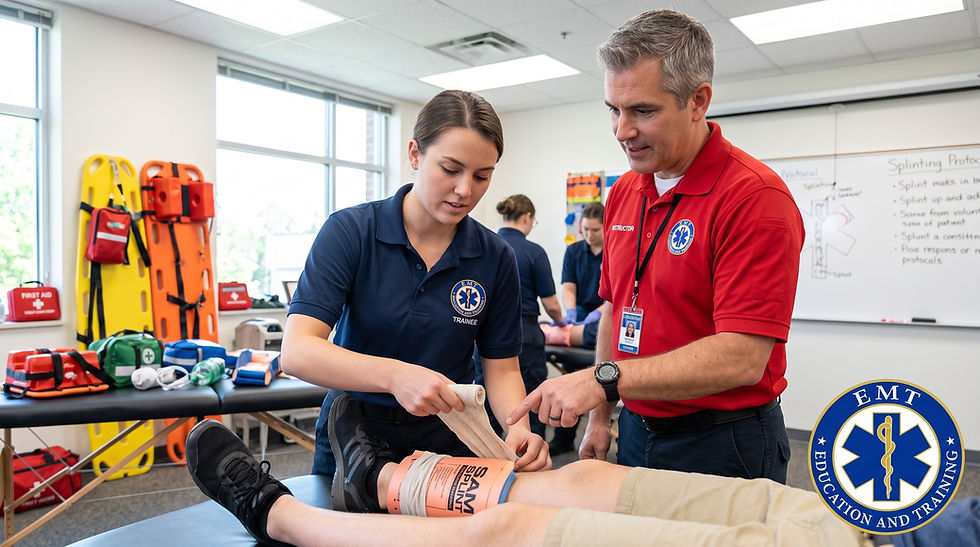
Practical sessions will require you to perform many procedures such as CPR, splinting, and emergency response techniques. You will be tested on your ability to perform these and many other skills during a “Practical Final” at the end of your course.
Scenario-Based Testing
For both written tests and skills, you’ll be tested on how well you apply your knowledge in simulated emergency situations.
Frequent Exams and Assessments
Written tests and quizzes are common, requiring regular review and preparation.
Time Commitment
EMT programs demand consistent study time outside of class to keep up with the material and master your skills. Plan on lots of study group sessions and lots of skill practice.
Knowing these expectations early helps you prepare for success.
Proven Strategies on How to Succeed in EMT School
If you’re concerned about the question, “is EMT school hard,” the key is preparation, consistency, and discipline. Here are proven strategies to help you succeed:
Start Preparing Before Day One
Take our EMT Preparation course at www.emteat.com and gain a foundation in basic anatomy, physiology, and medical terminology. This reduces the learning curve.
Create a Structured Study Plan
Be consistent. Set aside dedicated study time every day.
Focus on Understanding Concepts
Don’t just memorize information, understand the “why and the how” so you can apply what you have learned.
Stay Engaged in Class
Active participation improves retention and helps clarify complex topics.
Practice Real-Life Scenarios
Applying knowledge in simulated situations strengthens critical thinking skills.
Essential EMT Training Tips for First-Time Students
To handle EMT course difficulty, you need practical strategies that keep you on track. Use these EMT training tips:
Review material daily instead of cramming
Use flashcards for terminology and key concepts
Join study groups for collaborative learning
Practice hands-on skills as often as possible
Use our practice exams to identify weak areas https://mike-s-school-3d2c.thinkific.com/bundles/mega-study-pack
Stay organized with notes and study guides
Consistency and discipline will make a significant difference in your performance.
Frequently Asked Questions (FAQs)
How do I prepare for EMT school?
The best way to prepare for EMT school is to get familiar with medical terminology, basic anatomy, and how to study effectively before class starts. Students who spend even a few weeks reviewing these areas ahead of time report feeling less overwhelmed during the first unit, since EMT programs move fast and build on material quickly. A structured pre-course, like our EMT Prep Course, is built specifically to cover this ground before training starts.
What should I study before EMT class starts?
Focus on three areas before your first day: basic anatomy and body systems, common medical terminology, and how to read and interpret vital signs. You don't need to master these topics, just get comfortable enough that they're not brand new when your instructor introduces them. Reviewing a body systems overview and a medical terminology glossary is enough to start.
What is EMT school actually like?
EMT school is fast-paced, hands-on, and heavier on memorization than most students expect. Classes combine lecture time with skills practice, like patient assessment, splinting, and airway management, and most programs test both written knowledge and practical skills before certification. Depending on the course format, you'll spend anywhere from a few weeks to a full semester in class, with regular quizzes along the way.
How long does EMT school take?
EMT school length depends on the course format. An accelerated course can be completed in a matter of weeks with full-day sessions several times a week, while a standard or hybrid course spread across evenings or weekends can take a full semester. Our Accelerated EMT Course runs Monday, Wednesday, and Friday from 8am to 3pm for students who want to finish quickly and get into the field.
Is EMT school hard for beginners with no medical background?
EMT school is manageable for beginners, but it does require consistent study habits since the material moves quickly. Students with no prior medical background succeed regularly, the key is staying ahead of the material rather than trying to catch up after falling behind. Building a study routine before class starts makes a bigger difference than any prior medical knowledge.
What topics are covered in EMT school?
EMT programs generally cover patient assessment, airway management, trauma care, medical emergencies, pharmacology basics, CPR and AED use, splinting and bandaging, and ambulance operations. Most courses also include ride-along or clinical hours to apply these skills in real settings. Our EMT Prep Course breaks down 18 of these subject areas in advance, with a video and downloadable materials for each.
Do I need to study medical terminology before EMT school?
You don't need to be fluent in medical terminology, but a working knowledge of common terms helps you keep pace with lectures instead of spending class time looking words up. Terms related to anatomy, injuries, and vital signs come up constantly from day one.
Is EMT school physically demanding?
Yes, EMT training includes physical skills practice like lifting, carrying, kneeling, and performing CPR, so a reasonable level of physical fitness helps. You don't need to be an athlete, but you should be comfortable with hands-on, physically active learning.
What should I bring on the first day of EMT school?
Most programs expect students to bring a stethoscope, a watch with a second hand, a notebook, and comfortable clothing suited for hands-on skills practice. Your specific program will typically send a supply list before your start date, so confirm with your school directly.
Do I need CPR certification before EMT school?
Some programs require current CPR certification before day one, while others include it as part of the course. Check your specific program's requirements ahead of time so it doesn't hold up your enrollment.
Can I work while attending EMT school?
Many students work while attending EMT school, especially with evening, weekend, or hybrid course formats. Accelerated full-day courses are harder to combine with a regular work schedule, so course format matters if you need to keep working during training.
What tips help students succeed in EMT school?
The students who do best in EMT school study a little every day instead of cramming, practice skills outside of class time, and treat the pre-course material seriously instead of skipping it. Consistency matters more than intensity. Getting comfortable with how you study, not just what you study, makes the biggest difference once the course workload picks up.
What should I expect in my first week of EMT school?
Expect a mix of orientation, foundational lectures, and your first look at hands-on skills like taking vital signs. The first week is usually less intense than the weeks that follow, so it's a good time to lock in a study rhythm before the pace increases.
Attrition for EMT courses nationwide is somewhere around 50%. We want to drastically reduce that number by providing an EMT Preparation Course that will teach you the study skills and foundational knowledge needed to pass your EMT course BEFORE the course even begins. Think of it like this: The more you know before the course, the less you have to learn during the course! We believe our EMT Preparation Course at emteat.com will give you the best chance of passing your EMT course the first time.
👉 Ready to succeed where so many struggle? Enroll in the EMT Preparation Course today at emteat.com and give yourself the foundation you need to thrive.


Comments